
- Program Administration
- Introduction
- Musicology Guidelines and Milestones: Overview
- Annual Re-enrollment
- Graduate School Sign-In
- Stipend
- Graduate Student Committee
- Ombuds Office of Princeton University
- Plan of Study for First and Second Year
- General Exam
- Post-Generals Expectations & Opportunities
- Dissertation
- Funding Support for Musicology Ph.D. Candidates
- Dissertation Completion Enrollment (DCE) Status
- Enrollment Terminated/Degree Candidacy Continues Status (ET/DCC)
- 2026-2027 Calendar of Key Dates
Program Administration
Daniel L. Trueman, Chair
Woolworth Center for Music, Office 310
Gavin Steingo, Director of Graduate Studies (DGS) – Musicology
Woolworth Center for Music, Office 21
609-258-4088
Jacqueline Appleby, Director for Administration and Operations
Woolworth Center for Music, Office 310
609-258-4240
Rob George, Academic Program Manager
Woolworth Center for Music, Office 312
609-258-8346
Katherine Baltrush, Program Manager for Performance Activities
Effron Music Building, Office 207
KBaltrush@princeton.edu609-258-8124
Beth Schupsky, Business Manager
Woolworth Center for Music, Office 313
609-258-2443
Maureen Riggi, Academic and Financial Assistant
Woolworth Center for Music, Office 310
609-258-4241
Collin Costa, Production Manager
Effron Music Building, Office 204
609-258-8098
Introduction
Encompassing historical, theoretical, cognitive, and ethnographic approaches, the musicology program at Princeton encourages students to think about music broadly and gain experience in different corners of the discipline, while becoming experts in their chosen fields through researching and writing their dissertations and participating in the scholarly community on and off campus. Unlike many of our peer institutions, Princeton’s musicology program does not maintain strict boundaries between historical musicology, theory, cognition, and ethnomusicology. Rather, our flexible curriculum encourages students to think across the subdisciplines and design innovative research projects that take advantage of different approaches and methodologies.
The first two years are dedicated to taking seminars and preparing for and taking the General Exam. Key milestones are:
- The Diagnostic Theory Exam – intended to evaluate whether any independent work in theory would be useful for the work to be undertaken in the dissertation
- The First Year Exam – intended to provide skill-building and practice toward what will be asked in the General Exam
- Language Requirements – these may be exams or other demonstrations of proficiency in two languages that will help students better utilize resources in their chosen areas of interest
- The General Exam – 2-3 modules designed to allow faculty to evaluate students’ preparedness for a career in musicology. Passage of this exam is a requirement for continued candidacy toward the Ph.D.
The final three years are devoted primarily to dissertation research and writing and associated professional activities. Students who have successfully completed the General Exam serve as Teaching Assistants (Preceptors) during their time of enrollment.
This Musicology Graduate Handbook provides detailed information about the program and the requirements and expectations specific to the Music Department. Students are expected to adhere to all other University‐wide policies described in Princeton University’s Rights, Rules, and Responsibilities, including rules for Academic Integrity.
Musicology Guidelines and Milestones: Overview
| Year | Fall | Spring | Summer |
| 1st year | Seminars (3) Mentoring Committee Meeting Diagnostic theory exam | Seminars (3) Mentoring Committee Meeting First Year Exam | Language Study |
| 2nd year | Seminars (3) Generals Committee Meeting General Exam Module(s) | Seminars (2 or 3) Generals Committee Meeting General Exam Module(s) | Language Study Preliminary Dissertation Research Colloquia Series Planning |
| 3rd year | Seminar (if needed) General Exam Module(s), if needed Choose advisor(s) and draft dissertation proposal Manage Colloquia & Works in Progress Precepting, as available | General Exam Module(s), if needed Submit dissertation proposal Precepting, as available Manage Colloquia & Works in Progress | Dissertation research Prepare any grant applications requiring University nomination, due in early fall (Fulbright, DAAD, ACLS, etc.) |
| 4th year | Dissertation research and writing Precepting, as available Professional activities (conferences, grant applications, publications, etc.), in consultation with advisor(s) | Dissertation research and writing Precepting, as available Draft at least one (1) dissertation chapter before G5 reenrollment | Dissertation research and writing Professional activities (conferences, grant applications, publications, etc.), in consultation with advisor(s) for year 5 |
| 5th year | Dissertation research and writing Prepare applications for fellowships and jobs Precepting, as available Professional activities, as above | Dissertation research and writing Draft a minimum of two dissertation chapters before reenrollment Precepting, as available Review any DCE plans with advisor(s) | |
| DCE 6 and 7, if necessary | Dissertation research and writing Precepting, as available Outside teaching, as available | Dissertation research and writing Precepting, as available |
Annual Re-enrollment
Readmission to the program is not automatic year-to-year. All graduate students undergo a re-enrollment process in which they assess their own accomplishments in the program and provide projects for the work they anticipate doing in the year ahead. Those self-assessments and progress in the program are evaluated by the DGS in consultation with the faculty (first and second years) and their advisors (after year three). During the first two years students are expected to perform satisfactorily in their seminars and participate in the musicological community at large. Students working on their dissertation need to demonstrate adequate progress and should maintain close contact with their advisors. Faculty provide their reenrollment recommendations to the Graduate School for final review and decision.
This process is conducted via the Graduate School Reenrollment System. Students are notified of reenrollment decisions via email from the Graduate School. Reenrolled students must submit an online acceptance to this email via the Graduate School reenrollment system to complete reenrollment and be eligible for sign-in, access to financial support, and more.
Graduate School Sign-In
TigerHub is a secure website where students sign‐in for each semester, maintain their personal information, enroll in courses, and sign‐up for direct deposit.
It is essential that you complete this process as failure to sign in will result in termination of enrollment and inability to receive your paychecks and register for classes.
The following deadlines for Graduate Student Sign‐In in TigerHub will be as follows for 2026-2027, and are the same for both incoming and continuing students:
Fall 2026 Semester: August 31, 2026 at 7:00am EST
Spring 2027 Semester: January 29, 2027 at 7:00am EST
For more information, see https://gradschool.princeton.edu/academics/enrollment-status-progress/semester-sign
Stipend
Every student in our program receives the same stipend and tuition grant for five years, contingent upon the annual reenrollment process. Graduate students receive their stipend checks monthly on the last working day of the month. December differs, with pay typically distributed before Winter Break.
Students who have not yet completed their degree by the end of the fifth year are eligible to enter Dissertation Completion Enrollment (DCE) status for up to two years. Students who receive a substantial outside grant can usually bank a year of funding to be used in their first DCE year.
Students are encouraged to sign up for Direct Deposit through TigerHub to ensure most secure, fastest disbursement of funds to your accounts despite any travels, changes of address, mail delivery delays, etc.
Graduate Student Committee
In accordance with the Graduate School’s policies regarding Student Government and Advocacy, each year the Music Department establishes a committee of graduate students to act as liaisons between students and faculty.
The committee serves in an advisory capacity, providing feedback on curriculum, policies, and climate, facilitating communication between graduate students and faculty about areas of mutual concern. Committee members are encouraged to listen attentively to their colleagues’ different perspectives so that all viewpoints can be aired.
The committee meets with the musicology Director of Graduate Studies (DGS) at least once a semester. It is the responsibility of the committee to arrange meetings with DGS, formulate the agenda, and follow up with DGS with meetings of the minute and action plans as relevant.
The committee is typically comprised of up to 6 members. Each G1-5 class selects its own representative, and all students in Dissertation Completion Enrollment (DCE) status select one student representative. To make sure that as many voices as possible are heard, students are asked to serve on the committee for only one academic year.
Names of selected committee members should be submitted via email to the Academic Programs Manager and the DGS no later than September 11th.
Ombuds Office of Princeton University
The Ombuds Office offers all Princeton students, faculty, and staff member of the faculty, or staff a confidential place to discuss academic concerns, administrative issues, workplace issues, explanation and interpretation of policies and procedures, and many other issues and concerns. Since their office does not play a part in any formal University process, they are a great way to seek confidential, impartial advice on these challenging issues.
Plan of Study for First and Second Year
Incoming students are expected to spend at least one year in full‐time residence, regardless of prior graduate work, and all are subject to the same program, department, and Graduate School requirements.
Seminars
Students take twelve (12) graduate seminars and design their program in consultation with the musicology DGS, who must approve all course selections prior to registration. The typical course load is three (3) seminars per semester. However, students who wish to take a reduced course load of two seminars in spring of their second year may choose to take a seminar in the fall of their third year or (less typically) to take a fourth seminar during their first year.
The seminars offered usually reflect the current research interests of the faculty. While it is expected that the majority of the required seminars will be with the musicology faculty, students may occasionally supplement or substitute musicology course offerings with graduate seminars taught by the composition faculty, in other departments, or through the exchange programs at other Universities with the permission of the DGS. While students are encouraged to sample courses in other departments relevant to their interests, we recommend that no more than one course be taken outside the department in any given semester. Typically, advanced undergraduate courses do not count as seminars; if you find one that is particularly relevant to your research interests, you may petition the DGS for an exception. Language courses do not count as seminars.
Students may also take additional seminars in other departments after completing the 12 required seminars, but should discuss the matter with their advisor(s) to ensure that they have adequate time to concentrate on the dissertation.
Students who are interested in applying to the Interdisciplinary Humanities (IHUM) program are encouraged to take at least one IHUM seminar during their first two years of study.
Course Selection & Registration
Students should register for, change, or drop courses only after discussion with and approval of the DGS. To facilitate these approvals, the DGS will meet with individually with students still completing course requirements before the beginning of each semester.
For Fall 2026, the DGS will meet with incoming First Years, all Second Years, and any Third Years requiring additional coursework on August 19, 2026 between 3-6:30PM EST via zoom to establish course plans. Administrative staff will contact these students to help them book their individual time slots.
All courses registration is done through Stellic via TigerHub. Please see the Academic Calendar and Deadlines for more information about the dates for adding and dropping graduate courses.
Grading
Musicology seminars are normally graded Pass/Fail (P/F). To remain in good standing with the department, students are expected to attend seminar meetings and complete assignments in a timely fashion. Failure to complete the work of graduate courses during the semester in which they are taken may result in deferred reenrollment and negatively impact financial support.
The Music Department follows the Graduate School’s Policy on Incomplete Coursework, which states in part that a “…grade of ‘Incomplete’ (INC) should be given only under exceptional circumstances when there are compelling reasons, discussed in advance between the course ahead and the student…”.
If a student is granted an INC in a course, it is the student’s responsibility to follow up with the instructor and make sure that you have completed the requisite work. If the work remains incomplete and the grade is not filed within one year after beginning the course, the incomplete automatically becomes an F.
First Year Mentoring Committee
The August before their first semester, incoming students meet individually with the DGS to plan their first semester’s coursework and form a Mentoring Committee. This meeting typically happens in tandem with the meeting to discuss course selection.
The First Year Mentoring Committee is made up of the advisor a student thinks they will likely work with, the DGS, and a third musicology faculty member appointed by the DGS in consultation with the student. If the student’s advisor is the DGS, two additional faculty members will join, so that every committee has three members.
Students meet with their Mentoring Committee once during each semester of the first year to discuss their progress in the program and plan their First Year Exam. The dates and times for these Committee meetings are established by the Music Department administrative staff before the start of the semester and may not be changed except in highly unusual circumstances and by approval of all Committee members.
Committee membership is subject to change based on faculty leave schedules and if the student changes advisors.
Diagnostic Theory Exam
All first‐year musicology students are required to take the diagnostic theory exam, which asks students to analyze, discuss, and transcribe short pieces of music. The purpose of the exam is to determine whether the student would benefit from additional theory work either independently or in the context of a course or seminar, based on the students’ research interests and the general requirements of the musicology graduate program.
This exam is advisory in function; no student’s standing in the program will be jeopardized by their performance on the exam or during any subsequent remedial study.
The closed‐book diagnostic theory exam is sent to students electronically over Winter Break. Students can take the exam at any point over the break so long as they do not spend more than 12 total hours completing it. Completed tests must be submitted via email to the DGS and Academic Program Manager before the first day of the spring semester. For 2026-2027, the deadline is January 25, 2027.
Students will receive the assessment of their exam via email no later than one month into the spring semester. Assessment will come in the form of a brief prose account of the strengths and weaknesses of the student’s performance on the exam. In the case that additional study is recommended, a specific set of suggestions will be made.
Students can prepare by reviewing materials from undergraduate theory curricula such as:
- http://openmusictheory.com/
- Clendinning & Marvin’s A Musician Guide series
- Laitz & Bartlette’s Graduate Review of Tonal Theory: A Recasting of Common‐Practice Harmony, Form and Counterpoint
- Burstein & Straus’s Concise Introduction to Tonal Harmony
First Year Exam
Students complete one of the modules listed under the General Exam and the associated oral exam in May of their first year. For the 2026-2027 academic year, oral exams are scheduled for May 7, 2027. The members of the student’s Mentoring Committee administer and evaluate the First Year Exam. If a student fails the First Year Exam, they may retake it once during fall of their second year.
It is not recommended that students use the Research Paper module for the First Year Exam.
Language Requirements
Students must demonstrate proficiency in two (2) languages. Students should choose languages that are relevant to their course of study and research interests.
Choice of languages and schedule for completion should be proposed to and approved by the chair of their Mentoring Committee during the first semester of the first year. Changes can be requested as the course of study proceeds.
It is the student’s responsibility to confer with their mentoring committee about the status of their language exams, and to make the necessary arrangements to satisfy this requirement.
Examples of language exams that could fulfill the requirement, if approved by the Committee, include:
- Passing a reading exam administered by the relevant language department.
- Passing one of the university’s summer language courses.
- Passing a test administered by a qualified faculty member, arranged in consultation with the student’s Mentoring Committee chair.
- Passing a summer course at another institution, arranged in consultation with the student’s Mentoring Committee chair.
- Completing an online course or certification in a programming language such as Python or R.
- Contributing a short translation of an as-yet untranslated source that is critical to a student’s field, arranged in consultation with the student’s Mentoring Committee chair.
Barring exceptional circumstances, students should have fulfilled at least one (1) language requirement by the start of the second year in the program, and both languages by the start of the third year.
In certain situations, a student’s research interests may change at a point where they determine they need to acquire a different language than they’d initially anticipated; extensions to the timeline for completion of the language exam can be granted in exceptional cases of this sort.
Students may use their research funds to enroll in a summer language course at Princeton or another institution. Additionally, a limited about of funding for intensive summer language study is available from the Princeton Institute for International and Regional Studies (PIIRS).
If you have questions about the status of your language requirements, please contact the Music Department’s Academic Program Manager.
General Exam
The General Exam is one of the principal requirements for Ph.D. candidacy and allows the faculty to evaluate students’ preparedness for a career in musicology. It is designed to help students broaden their understanding of scholarship, methodology, and repertory in multiple fields, to demonstrate their knowledge of the discipline, ability to think critically, and to communicate effectively both orally and in writing.
General Exam Committee
The General Exam Committee is formed during the first semester of a student’s second year. It is usually made up of the same faculty who were on the student’s Mentoring Committee, and this body administers and evaluates the student’s General Exam. Committee membership is subject to change based on faculty leave schedules and if the student changes advisors.
Students meet with their General Exam Committee once each semester to discuss their plans and progress until they have completed their General Exam. The dates and times for these committee meetings are established by the Administrative Staff before the start of each semester and are not changeable except in highly unusual circumstances and with the permission of the Committee members.
General Exam Structure
Students must select three modules (or two in the case that a student does the Research Paper module) from the six options listed below, and each module must be selected in conjunction with a specific field, examples of which are also below.
Note that fields from the First Year Exam may not be repeated in the General Exam.
Each module comes with its own oral exam, described below. Fields must exhibit considerable breadth, encompassing a range of time periods, traditions, or methods. Individual modules may be more relevant to particular parts of music studies (e.g. historical musicology, ethnomusicology, theory, and cognition). The range of fields selected must be broad and must support the student’s intended research and career trajectory.
Students’ performance on the module product and its accompanying oral exam must reflect control over the selected field. Usually, one of the selected fields for the General Exam is the field within which a student plans to write their dissertation.
The selection of modules and fields, as well as the semester in which each module will be submitted and the oral exam administered, will be determined through close consultation with the student’s Mentoring Committee for the First Year Exam and their General Exam Committee for the General Exam. The General Exam Committee will only approve general exam plans that encompass a broad range of fields and that support the student’s specific research and career goals.
Modules
Timed Writing Exercise
Students have up to three (3) hours to complete a closed book, timed write on one question chosen from three provided prompts disclosed at the time of the exam. The timed writing exercise must show flexible control of the broader field in which the question sits. Administrative staff will work with students and their Committee to schedule the timed write near the end of the given semester.
The accompanying oral exam will follow three or four days after the timed write. In the 30-minute oral exam, students are questioned by their Committee about their written response and about the broader field. They must demonstrate control of the field in both their written and oral responses.
The timed writing exercise format may be used for multiple modules. Each timed writing exercise module a student chooses will be for a different field and have its own oral exam.
Transcription Exam
Students are provided a recording by administrative staff on a pre-determined date near the end of the given semester. Students may take no more than 6 hours over 2 days from the time the recording is provided to transcribe the excerpt. Transcriptions will be evaluated first and foremost on precision, accuracy, and cogency. In addition, students should demonstrate critical engagement with the epistemic implications of notation and transcription.
The transcription must be accompanied by prose (completed within the same 6-hour time period for the transcription itself) that explains decisions regarding format and system and that demonstrates awareness of scholarly discourse on notational representation. The latter includes, for example, Andrew Killick’s “Global Notation as a Tool for Cross-Cultural and Comparative Music” in Analytical Approaches to World Music 8(2) pp. 235-241 and Kofi Agawu’s “The Invention of ‘African Rhythm’ in Journal of the American Musicological Society 48(3) pp. 390-393.
The accompanying oral exam will follow three or four days after the submission deadline for the transcription and prose. In the 30-minute oral exam, students should show flexible control of the broader field within which the transcription sits.
Syllabus
Create a syllabus for an upper-level undergraduate course in the approved field. This syllabus includes three parts, which should show flexible control of the broader field, and sound pedagogical practices:
- A list the specific materials and class plan for each week, including outlines for lectures and discussions
- A separate written justification for all included materials and activities.
- A filmed 30-minute teaching demo of a portion of one of the class periods.
These three components must be submitted at least two (2) weeks before the scheduled oral exam. In the 30-minute oral exam, students will respond to questions from their Committee about their syllabus, justification, teaching demo, and about the broader field.
Literature Review
Students choose two or three nodes or subtopics within the selected field and write a literature review that synthesizes the most important scholarly trends in the field and identifies lacunae and areas for future research. Compared to the kind of response that would be expected in a timed written exam, the literature review should be much more polished and comprehensive. It should demonstrate cogent argumentation and flexible control of the field.
The literature review must be submitted at least two (2) weeks before the date of the scheduled oral exam. In the 30-minute oral exam, students will respond to questions from their Committee about their literature review and about the field.
Public Musicology Project
Students create a public musicology project within their selected field. The project should constitute a significant contribution of the caliber likely to be attract funding, or be widely used, or contribute to societal good. Examples might include an innovative website, a series of podcasts or videos, or a crowd-sourced project.
The completed project must be submitted to the Committee at least two weeks before the scheduled oral exam. The 30-minute oral exam will address the project as well as the broader field.
Research Paper
A research paper of sufficient quality to be competitive for publication in a major journal. The paper may originate in a graduate seminar or outside of it. The paper should be cogently written, and its ideas should be sound, persuasive, and original. The paper topic and the broader field within which it sits must be approved by the Committee, and students are responsible for demonstrating control of the larger field both in the ways their ideas are articulated in the paper, and in their responses to questions on the oral exam. The bar for a passing research paper is high. Students should only add this module to their general exam plan after sustained discussion and approval by their Committee. Students should expect to meet regularly with the faculty member advising them on the paper (this must be a member of their General Exam Committee), submitting drafts and progress and working with their feedback along the way.
The paper should be submitted to the Committee at least two weeks before the scheduled oral exam.
The oral exam will begin with a 15-minute oral presentation, which should be clear, well planned, and persuasive—suitable for inclusion on the program at a major conference. The presentation will be followed by 30 minutes of questions from the Committee on the paper, the presentation, and the broader field.
After the exam, the committee may request that students complete specific minor revisions of the paper. This will constitute a pass so long as student submits the requested revisions within four weeks from the date the request is issued.
The research paper module is an intense undertaking that will require two semesters of dedicated work. This module is not recommended for use in the First Year Exam.
If a student selects the research paper module, they will only need to select one other module for the General Exam, rather than the customary two, in order to account for the extra effort involved in developing a publishable piece of scholarship.
Fields
Acceptable fields are quite broad and allow students to absorb large repertoires and ranges of scholarship. Fields should not be narrow, vague, or predicated on a single thesis or approach. Examples of fields include:
Medieval and Renaissance
Medieval Mode, Theory and Practice
Medieval Reception of Ancient Theory
Byzantine, Latin, and Slavic Chant Traditions
Vernacular Song, 1100 – 1400
Medieval Plainchant
Troubadours and Trouvères
Polyphony, 900-1300
Italian Madrigal: 1530-1638
Seventeenth and Eighteenth Centuries
French Opera from Lully to Rameau
Italian Opera from 1638–1678
Music and Theater in the Italian courts, 1580-1660
17th-century keyboard music
Music in New Spain, 1580-1700
Music in the age of Louis XIV
The cantata, 1660-1720
The baroque suite
Nineteenth Century
Romantic piano
Program Music, 1830-1911
The concerto 1830-1900
Russian Romance Russian Piano Music
Early Romantic Piano Sonata Nineteenth-Century Lieder
Phrase Structure Analysis Post-1800
The String Quartet from Beethoven to Brahms
Opera Seria from Arcadian forms to Gluck
Twenty and Twenty-first Centuries
The Twentieth-Century String Quartet
American Musical Theater
Second Viennese School
Narrative Film Music, 1927-1961
Hip Hop
Post-WWII opera
American Experimentalism: Ives through the Minimalists
Jazz from Origins to Bebop
Cognition
Rhythm and meter
Timbre
Social psychology of music
Pitch perception
Learning and development
Affect
Aesthetics and value
Crossmodality
Non-Western and Popular Music
Intellectual History of Ethnomusicology
Folk Music Collecting
Musical Expression in the African Diaspora: 1945-Present
African Popular Music
Gamelan
“World Music”
Latin American Musical Nationalism
Diaspora
Analytical/ Theory Topics
Schenker and His Disciples
Voice-Leading beyond Common-Practice Organicism
Chromatic and post-Chromatic Harmonic Theory since the Mid-19th Century
Phrase Structure Analysis Post-1800
Music and multimedia
Phenomenology
Analysis and performance
Syntax
Sound Studies and Media Theory
Histories of Recorded Music
Anthropology of Sound
Post-Humanism
Intellectual History of Sound Studies
The Question of Media in Various Scholarly Traditions (e.g., art history, anthropology)
The Soundscape
Results
Students are expected to demonstrate a comprehensive knowledge of the core issues and debates within each of their chosen fields, both in the module work they submit and in the oral exam. Responses should show control of the relevant scholarship, methods, repertory, and sources in the field. Candidates should demonstrate an ability to evaluate scholarship critically and to substantiate their views with examples.
Exams are evaluated by the student’s General Exam Committee. In some cases, the Committee may change across a student’s course of study; the Committee in place at the time of a module’s submission and oral examination is the committee who evaluates that component of the exam.
Students will be informed about results for each module within 48 hours of its oral exam. Within one week of the oral exam, they will receive a written summary of the strengths and weaknesses of the performance on that module.
Students who come into the program with significant relevant experience in musicology should aim to complete the 2-3 required modules by the end of the second year. All students should aim to complete all parts of the exam no later than the end of the first semester of their third year. Only in rare, exceptional circumstances will a student be permitted to complete outstanding modules of the general exam in spring of the third year. No portion of the general exam—either a module or a retake of up to one module—may be undertaken later than the second semester of the third year.
If a module is failed with a performance that reveals some strengths, but also discrete problems that could be addressable in a retake, the student may be invited to retake that module on a specific timeline (in all but the most exceptional cases, the semester following the failure). The Committee will specify whether the retake needs to be on the same module and field, or whether the module and field can or must change. Students will only retake the portion of the exam that they failed (for example, students could be asked to retake only the oral exam if the written portion was strong, or vice versa).
Possible outcomes of the general exam include:
- Pass and move on to doctoral candidacy;
- Pass, but do not move on to doctoral candidacy (if all other requirements are met, a student can receive a terminal master’s at this stage);
- Fail with the option to retake the exam, or;
- Fail with no option to retake the exam (in cases where the student failed the same module twice).
Timeline
Oral exams
Each general exam module has its own oral exam. These are scheduled at the end of the semester within which the module is submitted (December for fall, May for spring) on one day designated by the department. If a student submits more than one module in a particular semester, they will sit for more than one oral exam. For the 2026-2027 academic year, oral exams are scheduled for December 11, 2026 for the Fall, and May 7, 2027 for the Spring.
Language exam and general exam planning and approval process
Students and their General Exam Committee should agree on the modules, fields, and timeline of the student’s general exam during their meeting in the first semester of the second year.
Students are responsible for communicating regularly with the Committee, and for meeting deadlines. Neglecting to submit or take an exam that is part of the agreed-upon, planned schedule will constitute a failure. As in the case for other types of module failures, students will be offered a retake, unless it constitutes the second failure.
Sample Pathways
Student A
| Fall | Spring | Summer | |
| YEAR 1 | First Year Exam: Syllabus Module on Jazz from Origins to Bebop Field | Language exam (Russian) | |
| YEAR 2 | Research Paper Module on Secular Music in 17th Century England Field (counts as two modules) | Language exam (Spanish) | |
| YEAR 3 | Timed Writing Exercise Module on Neo-Riemannian Theory Field |
Student B
| Fall | Spring | Summer | |
| YEAR 1 | First Year Exam: Timed Write Module on Pitch Perception Field | Language exam (Python) | |
| YEAR 2 | Timed Write Module on Sacred Music in Early Modern and New Spain Field; Transcription Module on Indigenous Sámi Music Field | Public Musicology Project Module on Affect Theory Field | Language exam (R) |
| YEAR 3 |
Post-Generals Expectations & Opportunities
Overview
After successfully completing their General Examination, students devote their time to dissertation research and writing, precepting (when available), and professional activities as appropriate. When Seminar work into the third-year has been approved, those students will also be continuing coursework.
Third‐year students should concentrate primarily on finishing their dissertation proposals. The dissertation should be the top priority for fourth‐ and fifth‐year students.
Progress on the dissertation will be evaluated at reenrollment and is taken into consideration in awarding extra funding and teaching and is also a factor in deciding whether a student is prepared to apply for various grants and fellowships. It is strongly advised that students not overcommit to publishing projects that prevent them from making reasonable progress on the dissertation.
Professional Opportunities
Students are encouraged to take an active part in the working musicological community at large, through participation in regional, national, and international meetings. Students may use their research funding to cover the cost of society memberships, if they wish.
While we encourage students to pursue professional opportunities, present papers, teach, and publish articles as appropriate, it is expected that graduate students will discuss these plans with their advisor(s) in advance to make sure that the projects are viable and that they have worked out a plan to share their work with their advisors before submitting it.
It is the students’ responsibility to leave enough time before a deadline for their advisors to read a draft of a major conference paper or help vet a publication.
Letters of Recommendation
Before requesting a letter of recommendation, students should discuss each application with advisor(s) in advance to make sure that the opportunity is appropriate at this stage in their career. There are always unexpected opportunities that will arise, but under most circumstances students should give each faculty member a minimum of two weeks to write a letter of recommendation, ideally four. Provide your recommender with a description of the fellowship or grant, a draft proposal, a CV, and a list of bullet points that they might want to emphasize in their letter. For recommenders who are not your primary advisor, make sure they have a clear idea of how your work has progressed since the last time they wrote for you.
Colloquia Series
The Musicology Colloquium series, funded by the Music Department, is organized by the third‐year students in consultation with the DGS. The organizers should submit a proposed slate of speakers to the DGS for approval by August 14. The DGS may request changes before approving.
Early in the summer between their second and third years, the organizers will receive information about the annual budget and procedures for booking and paying speakers.
For purposes of professional development, students are strongly encouraged to attend all colloquia.
Works-in-Progress Series
The Work‐in‐Progress (WIP) series, also organized by the third‐year musicology students, provides an opportunity for graduate students to share their work with one another. Students are expected to present their dissertation proposals at a WIP session during the second semester of their third year and are also encouraged to use the WIP series to rehearse conference papers throughout their enrollment. Regular attendance in the Works‐in‐Progress Series is expected of all students.
Teaching Opportunities
Teaching Assistantships/Precepting
As noted on the Graduate School website, assistant teaching “…assignments awarded to graduate students by the academic departments and programs. Graduate students serving in these roles are referred to as teaching assistants, or TAs. Most Ph.D. students at Princeton University serve as teaching assistants at some point during their enrollment, often during specific years of study. Individual programs specify whether and when such teaching may be required. With very rare exceptions, first-year students in Ph.D. programs may not be appointed as TAs. In all cases, graduate students should have the permission of their DGS and adviser before taking on a TA appointment.”
In addition, the Graduate School requires all first-time TAs to undergo training with the McGraw Center to establish a foundation of essential teaching issues and skills. All graduate students must complete this mandatory training before being eligible to take on TA appointments. These training sessions are typically offered at the beginning of each semester at the Frist Campus Center.
In accordance with Graduate School policies, musicology graduate students are typically not asked to take on teaching duties until after they have passed the General Exam. Exceptions are sometimes made in specific circumstances depending on a variety of factors.
Students will be polled each semester about their availability and interests in teaching for the following semester. While the Music Department tries to factor in students’ individual requests, the teaching assignments depend upon multiple factors including class enrollments, funding allocations, and faculty preferences and needs, progress on the dissertation, and more. Priority may be given to DCE students who have exhausted their regular funding.
TAs may teach several weekly sections and/or support grading, depending upon the class enrollment and course material. TAs are also expected to attend all the regular lectures and help with grading or make‐up classes as requested by the instructor. For more information on TA Hours Allocations, Appointment Dates, and Tuition Contributions/Stipends, please visit https://gradschool.princeton.edu/financial-support/assistantships#:-:text=assistantship%20in%20instruction.
For additional TA opportunities outside of the Music Department, please see this link.
Collaborative Teaching Initiative
Students who have excelled as preceptors may also be able to participate in the Collaborative Teaching Initiative, which provides the opportunity for students to co‐design and co‐teach a Princeton undergraduate course with a current full‐time faculty member. The course proposals, prepared by both the student and the sponsoring faculty, are subject to rigorous review, first by our own curriculum committee (two DGSs, Chair, and DUS) and then representatives of the Deans’ Offices. Students who have an idea for an innovative course should begin by discussing it with the faculty member in question no later than February of the preceding academic year. Please keep in mind that in a department our size these opportunities are relatively rare—typically no more than one a year for the entire department—and depend on curricular needs and faculty commitments. We may not be able to put through even the most exciting proposals. As with precepting, priority may be given to DCE students.
Outside Teaching and Community College Engagement
Post‐Generals students are also encouraged to explore opportunities to gain teaching experience outside the University either in area colleges or the Community College Teaching Fellowships. Students who are in their regular period of enrollment and still receiving full stipends should get permission from their advisors before accepting an outside teaching position.
Additional Teaching Opportunities and Support
For more information on opportunities and resources, please contact your DGS and see the Graduate School’s Page on Teaching Information.
Dissertation
Dissertation Advising
Students should begin considering possible doctoral dissertation subjects as soon as possible after admission to the program and are urged to identify and meet with faculty whose interests seem best suited to a potential dissertation topic.
Concentrated work on the dissertation begins after the successful completion of the General Exam; students should schedule a meeting with a prospective advisor(s) early in the third year to discuss potential topics. Prospective advisors and students are urged to have a frank conversation early in the process to clarify expectations and responsibilities, to work out a mutually beneficial schedule for meetings and deadlines, and establish clear guidelines for communications and expectations regarding reading drafts, requests for letters of recommendations, managing of outside activities (conferences, teaching, publications), etc. It is the student’s responsibility to maintain contact with their advisors and make sure that they are making adequate progress on the dissertation.
Each dissertation must also be read and approved by a second reader who is a full‐time (non‐ emeritus) member of the Music Department Faculty. Second readers may be involved with the dissertation from the initial stages or may enter the process closer to the completion of the dissertation.
Both primary and secondary readers submit reports to the Faculty and Graduate School a month before the Final Public Oral Exam (FPOE). FPOEs will not be scheduled without the full approval of both readers. Depending upon the topic, it may be desirable to have an outside reader from another institution or department, depending upon the special nature of the dissertation and needs of the student. Outside readers are offered a small stipend for their services and may also attend the FPOE. The decision to invite outside readers is made by the DGS and advisor in consultation with the student.
Should there ever be any concerns about advising, students should contact either the DGS or the Department Chair, who will help you find an appropriate and comfortable way to address the problem. Students throughout the University have benefitted from the services of the Ombuds Office, which assists students, faculty, and staff with finding strategies to handle difficult interpersonal relationships on campus with complete confidentiality.
Dissertation Proposal
The dissertation proposal is the principal requirement for third year students. While third‐year students may precept and/or take one or two seminars, most of their attention should be devoted to completing a dissertation proposal no later than the end of the spring semester.
While proposals necessarily differ in length and style according to the topic, a successful dissertation proposal typically includes the following:
- A compelling discussion of the topic, its rationale and originality, and the contribution the dissertation will make to the discipline;
- A description of the methodologies;
- A review of the relevant literature;
- A preliminary table of contents and paragraph‐length abstract of each chapter;
- A proposed schedule for completion;
- A bibliography including primary sources and selected secondary sources that intersect with your work.
Some proposals may also include a brief preview of the kind of work you intend to do, such as analysis or discussion of a discrete problem. The best dissertation proposals are succinct— typically not more than 25‐30 pages. Remember that dissertation proposals are preliminary documents, a snapshot of what the project looks like to you at this point in the research, subject to change over time. A well‐crafted dissertation proposal will provide you with prose that you can use for grant applications, elevator speeches, and will likely figure into the introduction of your dissertation.
Once the advisor has approved the dissertation approval, it should be submitted to the Academic Programs Administrator for the milestone to be recorded and then presented in a Works‐in‐Progress session before the end of the term. Admission to the fourth year may be contingent upon approval of the dissertation proposal.
Dissertation Writing in Fourth & Fifth Years
It is expected that most fourth‐year students will complete at least one chapter before reenrollment and fifth‐year students will complete a minimum of two chapters.
Exceptions to these milestone goals may be made for those who are doing research or fieldwork overseas and thus might begin writing somewhat later.
Final Public Oral Exam (FPOE)
Ideally, the doctoral dissertation is written during the student’s official last year in residence to ensure full and frequent consultation with the advisor and other faculty members.
Eligibility to Defend
If a student submits a doctoral dissertation more than five years after passing the general examination, the department is not automatically required to accept it for review. In such cases, the department must hold a faculty vote to determine whether the dissertation will be received for review and examination.
Please remember that the final decision about whether a dissertation is ready to be defended is made by your advisors and their decisions are final. While faculty make every effort to accommodate deadlines for jobs or postdoctoral fellowships, the department will schedule FPOEs only for students whose dissertations have the full approval of both readers.
Timeline for a Standard Defense
In the final stages of writing the dissertation, students will need to carefully consider their timeline and scheduling plans for their Final Public Oral Examination (FPOE). Final Public Oral Examinations (FPOEs) may be scheduled anytime in the year when the faculty are available to conduct the examination. The following outlines the typical timeline for a standard defense:
- Student Declares Intent to Defend (min. 12 weeks prior to preferred defense date)
- When a student is ready to plan their defense, they must contact the department’s Academic Program Manager via email, with their DGS, Advisor, and selected readers on copy.
- While 12 weeks is the minimum to declare intent to defend, it is welcome and encouraged for students to begin this process earlier.
- Schedule an FPOE Date and Seat Faculty Quorum – Upon receipt of intent to defend, Academic Program Manager will:
- Confer with the advisor and DGS to confirm that the dissertation is sufficiently ready to schedule defense;
- Support coordination with the student and faculty to plan an appropriate FPOE date and faculty quorum.
- Support seeking Graduate School approval for external readers, examiners, and/or virtual FPOEs, when needed. Approval is at the discretion of the Graduate School and is not guaranteed. This may call for additional lead time in some cases.
- Students should plan to meet with the Technical Manager in the FPOE venue a few days ahead of the defense date to test audio/visual, computer, and teleconferencing needs.
- Advanced Degree Application (min. 3 weeks prior to confirmed defense date)
- Active students (G3-G7) complete their Advanced Degree Application (instructions linked here). This application must include:Final Title Page – Please refer to the LibGuide for formatting guidelinesFinal Abstract – 350 words or less
- Student provides the Title Page, Final Abstract, final full dissertation, and accompanying media to the Academic Program Manager and Technical Manager to allow for internal circulation among faculty and allow appropriate A/V support for the defense.
- Final public oral examinations are to take place in-person. In cases where an appearance for the FPO would constitute a substantial hardship for the candidate due to extenuating reasons, the director of graduate studies, acting on behalf of the department and with the approval of the adviser(s) and all principal examiners, may recommend to the Graduate School the virtual, video-conferenced examination of the candidate, with the department continuing to uphold in all other respects the open, public nature of the examination. Students approved for a virtual examination must connect with the Academic Program Manager and Technical Manager to plan any Zoom and other A/V support needed.
- Reader Reports: Faculty readers and any external readers submit their final, formal reader reports to the Academic Program Manager. The reader reports will be attached to the Advanced Degree Application by the department.
- Advertise the FPOE – Academic Program Manager and other staff will advertise the FPOE no less than 3 days prior to the defense date, in accordance with Graduate School Requirements.
- Defend – The student defends for a panel of faculty examiners on the scheduled date.
- All FPOEs have a minimum quorum of 3 examiners.
- At least two of the examiners must not have served as principal readers of the dissertation.
- Please see below for more details on regulations for outside readers.
- Students wishing to work with an outside reader must contact their advisor. If the advisor approves, then the advisor must email the DGS, Academic Program Manager, and Business Manager, cc-ing the student, with this request, no later than 12 weeks prior to the intended FPOE date. This is the same minimum deadline as declaring intent to defend. Review and approval are also required by the Graduate School, in accordance with their quorum and reader/examiner qualification policies. These parameters may change in future years.
- Submission of Final Requirements – Ph.D. students must submit the Checkout Form and Final Paperwork Form to be included on the upcoming degree list. Both forms must be submitted within two weeks of the defense or by the degree deadline, whichever occurs first. This paperwork will take 2-3 hours to complete and includes:
- A Checkout Form submitted via TigerHub- Graduation tile – Checkout Form
- Submission of dissertation PDF to Princeton’s ProQuest ETD site
- Payment of any applicable publishing and copyright fees (the Graduate School requires traditional or open access publication and does not allow publication restrictions).
- Students must save a copy of the ProQuest submission confirmation email to attach to the final paperwork form.
- Complete the Survey of Earned Doctorates
- Save an electronic copy of the “Certificate of Completion” page of the SED to attach to the final paperwork form
- Complete the Graduate School Exit Survey
- You will receive an email with a personalized link inviting you to complete the survey. You can also find your survey link on TigerHub
- Upon completing and submitting the survey, you will receive a confirmation email. Please save the confirmation page or email and attach it to your final paperwork form.
- If a verification letter is needed prior to receiving the diploma, this can be requested on the final paperwork form.
Timeline for Defense for Dissertation Completion Fellowships & Postgraduate Research Associates
- Recipients of the Postgraduate Research Associate Program (or, PGRA) who are teaching in the term following their FPOE use the standard FPOE guidelines, but must do so by no later than the December 15 deadline (for spring semester teaching) or May 6 deadline (for fall semester teaching). Later deadlines cannot be granted, due to the deadlines for teaching.
- PGRA recipients who do not successfully complete the FPOE by the appropriate deadline become ineligible to convert to PGRA status. They may, however, continue enrollment in DCE status. Such students will have no guaranteed funding from the Graduate School, except in cases of previously obtained University funding, and no further opportunity for a PGRA appointment. These students may apply to and receive funding opportunities available to DCE students including Teaching Assistantships, departmental funds, and external awards.
- Recipients of the Dean’s Completion Fellowships (or, DCF) who are not teaching the following term use the standard FPOE guidelines, but must do so by no later than the December 15 deadline (for fall semesters) or May 6 deadline (for spring semesters). Later deadlines cannot be granted, due to the deadlines for the DCF process.
- Due to these deadlines, scheduling will begin upon notice of the award of the PGRA or DCF.
Timeline for Defense More Than 5 Years After Completing General Exams
- Student Requests to Defend (min. 16 weeks prior to preferred defense date)
- A student in ET/DCC status may present a dissertation for consideration by the department without special approval from the department or the Graduate School for up to five years following the successful completion of the general examination.
- When a student is ready to plan their defense, they must submit a completed dissertation draft to the department’s Academic Program Manager via email, with their DGS, Advisor, and selected readers on copy.
- Faculty vote to hear the defense
- If a student wishes to submit a dissertation more than five (5) years after passing the general examination, and/or their ET/DCC status has been terminated, then the department must vote to determine whether the appropriate faculty wish to review the dissertation. The department is not obligated to review dissertations from former ET/DCC students or consider requests to return such students to ET/DCC status. Requests to return former ET/DCC students to ET/DCC status always require the approval of the Graduate School.
- In these cases, the Academic Program Manager will facilitate a vote to determine whether the appropriate faculty wish to review the dissertation. This may be conducted via email, with decisions rendered by a simple majority.
- Schedule an FPOE Date and Seat Faculty Quorum – Upon an approving vote, Academic Program Manager will:Confer with the advisor and DGS to confirm that the dissertation is sufficiently ready to schedule defense;
- Support Coordination with faculty with work with the student and faculty to plan an appropriate FPOE date and faculty quorum.
- Support seeking Graduate School approval for external readers, examiners, and/or virtual FPOEs, when needed. Approval is at the discretion of the Graduate School, and is not guaranteed. This may call for additional lead time in some cases.
- Students should plan to meet with the Technical Manager in the FPOE venue a few days ahead of the defense date to test audio/visual, computer, and teleconferencing needs.
- Advanced Degree Application (min. 4 weeks prior to confirmed defense date)
- Students who have been unenrolled for more than one (1) year no longer have Princeton login credentials. Therefore, the Academic Program Manager must complete the Advanced Degree Application on behalf of the student.
- Students must provide the following to the Academic Program Manager:Current legal nameCurrent addressFinal Title Page – Please refer to the LibGuide for formatting guidelinesFinal Abstract – 350 words or lessFinal, formal reader reports from Faculty (the student or staff must upload to the application)The final, full paper itself. This must include any edits/adjustments the faculty advisor and readers required after reading. Any accompanying mediaOther details, as needed.
- Final public oral examinations are to take place in-person. In cases where an appearance for the FPO would constitute a substantial hardship for the candidate due to extenuating reasons, the director of graduate studies, acting on behalf of the department and with the approval of the adviser(s) and all principal examiners, may recommend to the Graduate School the virtual, video-conferenced examination of the candidate, with the department continuing to uphold in all other respects the open, public nature of the examination. Students approved for a virtual examination must connect with the Academic Program Manager and Technical Manager to plan any Zoom and other A/V support needed.
- Academic Program Manager circulates materials to the faculty.
- Advertise the FPO – Academic Program Manager and other staff will advertise the FPO no less than 3 days prior to the defense date, in accordance with Graduate School Requirements.
- Defend – The student defends for a panel of faculty examiners on the scheduled date.
- All FPOEs have a minimum quorum of 3 faculty.
- At least two of the examiners must not have served as principal readers of the dissertation
- Please see below for more details on regulations for outside readers.
- The Department typically does not provide fees for outside readers. If compensation is required in some way, students and their advisor and/or DGS may raise it early with the Academic Program Manager and Business Manager for review.
- Submission of Final Requirements – Ph.D. students must submit the Checkout Form and Final Paperwork Form to be included on the upcoming degree list. Both forms must be submitted within two weeks of the defense or by the degree deadline, whichever occurs first. This paperwork will take 2-3 hours to complete and includes:
- A Checkout Form submitted via TigerHub- Graduation tile – Checkout Form
- Submission of dissertation PDF to Princeton’s ProQuest ETD site
- Payment of any applicable publishing and copyright fees (the Graduate School requires traditional or open access publication and does not allow publication restrictions).
- Students must save a copy of the ProQuest submission confirmation email to attach to the final paperwork form.
- Complete the Survey of Earned Doctorates
- Save an electronic copy of the “Certificate of Completion” page of the SED to attach to the final paperwork form
- Complete the Graduate School Exit Survey
- You will receive an email with a personalized link inviting you to complete the survey. You can also find your survey link on TigerHub
- Upon completing and submitting the survey, you will receive a confirmation email. Please save the confirmation page or email and attach it to your final paperwork form.
- If a verification letter is needed prior to receiving the diploma, this can be requested on the final paperwork form.
Receipt of Advanced Degree
For this academic year, the following chart outlines the degree deadlines and accompanying dates when the degree will be awarded. The degree deadlines are the final dates by which the student must have successfully defended their dissertation and completed all post-FPOE final paperwork required of the Graduate School. If the deadline on the left in the chart below is met, then the advanced degree will be awarded on the date on the right. This schedule is subject to change, with the most current dates available at https://gradschool.princeton.edu/academics/degrees-requirements/degree-deadlines#:-:text=advanced%20degree%20deadlines
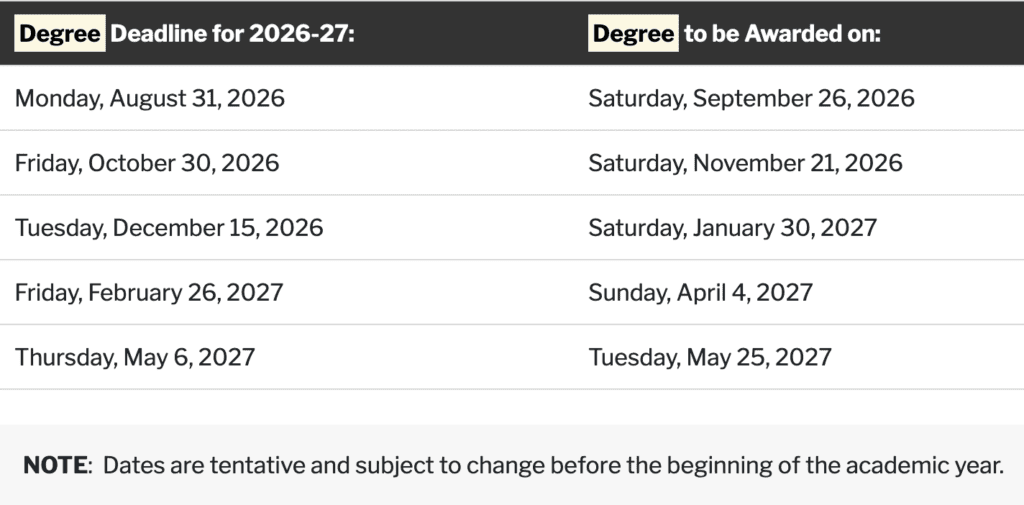
For more information on your status after the FPOE please visit: https://gradschool.princeton.edu/academics/degrees-requirements/advanced-degree-application-process
Additional Dissertation Resources
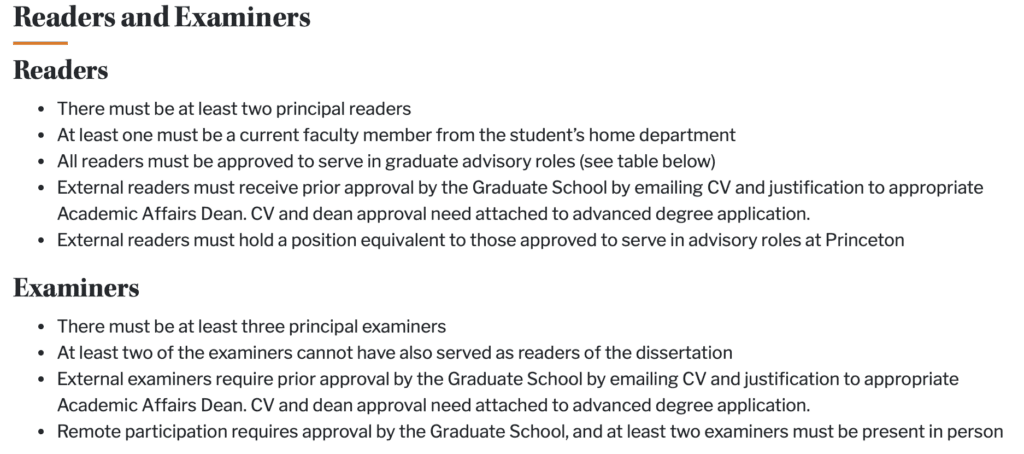
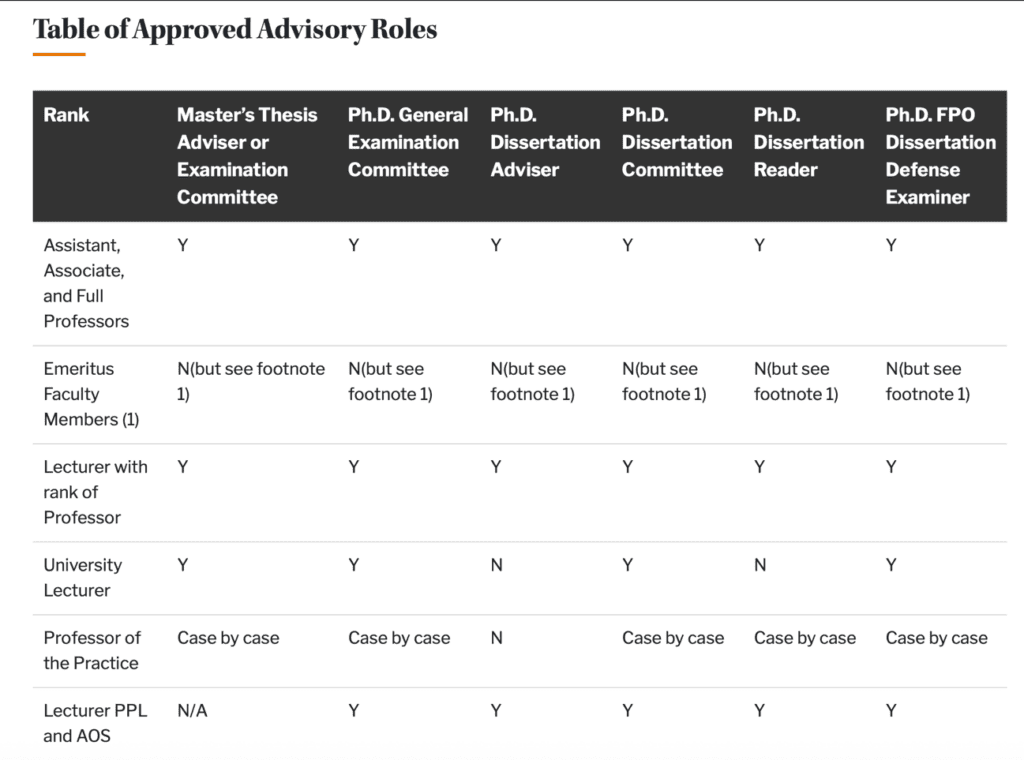
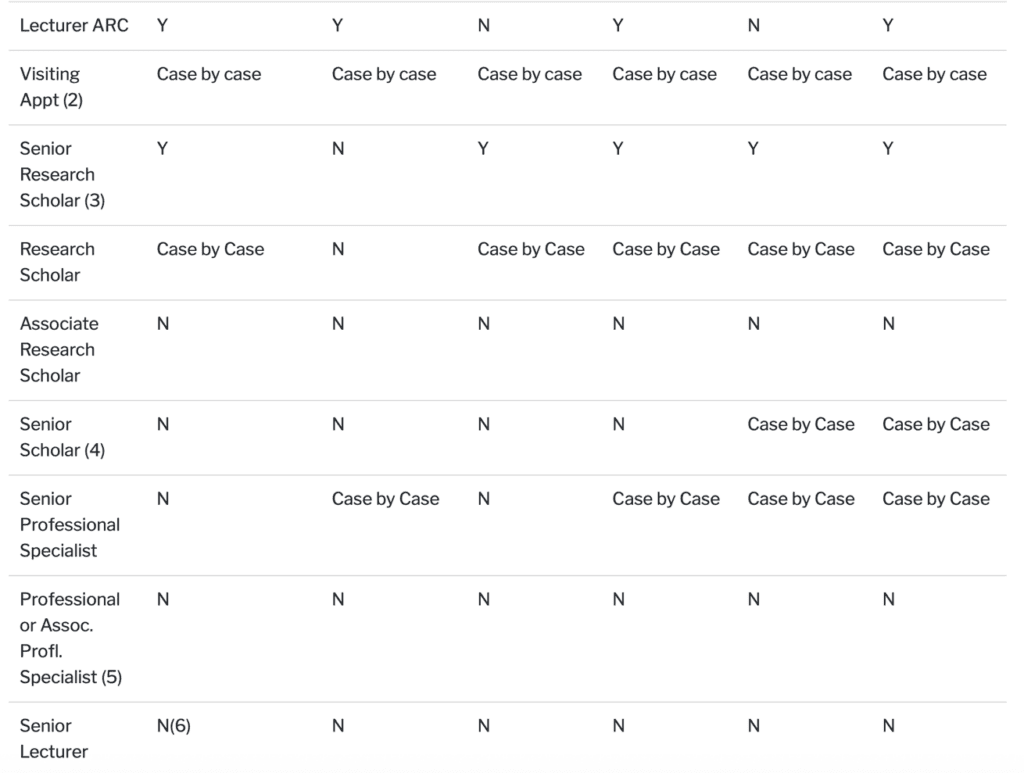
For more information on dissertations and FPOEs, please visit https://gradschool.princeton.edu/academics/degrees-requirements/dissertation-final-public-oral-examination.
Funding Support for Musicology Ph.D. Candidates
Base Support
The Graduate School Financial Support Model details the amounts and pay schedules of it Tuition, Student Health Plan, and Stipend support provided to enrolled graduate students during their first year, as well as Fellowship and other funding opportunities that support Princeton’s full-funding guarantee for PhD students throughout their regular program enrollment.
Music Department Financial Support
Research Funds
Each graduate student is provided a pool of research funding for travel, equipment, and other approved needs.
Incoming graduate students may receive up to $2,400 per year for five years as research funds to be accessible until end of G7 or the semester in which dissertation defense occurs, whichever comes first.
The department will plan to disperse up to $2,400 per year per student, but within G1 and G2, students can ask for a one-time advance for up to $6,000 (vs. the $4,800 set to be automatically dispersed over the course of the first 2 years). The advanced, additional amount (up to $1,200) will then be subtracted in equal parts from remaining fund allocations scheduled to be released over the next 3 years.
Students may propose rolling over funds to accumulate more than $2,400 to be used in a single year after G2, with permission from their DGS and the administrative staff.
The process for students to submit requests for use/advances/rollover of funds/etc. is to email the Business Manager and Director of Administration and Operations. They will collate and present to the DGS for approval.
Automatic categories will be developed for common expenses to be processed through the office without need for approval by a DGS. Examples of these could be:
- Purchase of common equipment including computers, audio production equipment, or software
- Conference fees
- Studio lessons with Princeton studio faculty
- Outside lessons with non-Princeton faculty
- Language study
- Other specialized study such as Ableton, audio production, mixing, and more
To apply to use available balances, visit SAFE (the Student Activity Funding Engine).
Applications must include a detailed budget proposal, including any receipts and booking confirmations, and an explanation of the intended used.
Those seeking funds for travel must also complete required University travel enrollment through Enroll My Trip. Travel-related funds will not be awarded if the travel enrollment is not approved.
Completed applications are reviewed by the relevant DGS. If funding is awarded, the student will receive an email from SAFE with instructions on next steps to accept the funds.
Please contact the Business Manager for your Bryan Fund balance at any time.
Additional Departmental Funds for Beneficial Projects
Graduate students may request additional funding from the department if they want to propose a project or an initiative that benefits more than just them as individuals (i.e., launching a mentorship program, curating a conference, etc.)
Student Activity Funding Engine (SAFE)
SAFE is the University’s one-stop resource for supplemental funding. There, students will find portals to apply available research funds from their departmental allocation, funds available via select fellowships and grants, and applications to funding opportunities provided by the Graduate School and other campus partners.
Additional Funding Opportunities
Student Activity Funding
The Graduate School seeks to support student innovation and enrichment via targeted funding opportunities. Such opportunities may include support for travel to present research at professional conferences, summer research, and other professional development.
Complete eligibility criteria, application deadlines, timelines, and application instructions are available in SAFE.
Princeton and External Fellowships
The Graduate School Financial Support Model shares an array of Princeton University and external fellowship opportunities to bolster funding throughout regular program enrollment. Many of these opportunities allow recipients to bank some funding for future use in a first DCE year, if necessary. Terms and conditions differ fellowship-to-fellowship. Students are encouraged to consult with their advisor(s) and DGS about appropriate opportunities and application support.
Honorific Fellowships
Princeton departments and programs may nominate students whose work shows exceptional promise for one of a few Honorific Fellowships. Final selection for such fellowships is made by the dean of the Graduate School and the academic affairs deans, in consultation with a Faulty Committee.
The Music Department typically nominates one musicologist for Honorific Fellowships, the selection of whom is voted on by the musicology faculty. Since these are exceedingly competitive, the department will only nominate students who:
- Are qualified applicants to the given fellowship;
- Has done exceptional work, and;
- Are likely to finish the dissertation the following academic year.
All graduate students who are eligible will be considered for Honorific Fellowships; students do not need to request consideration.
If the candidate nominated for an Honorific Fellowship is not successful, the musicology faculty will automatically nominate that student for the Dean’s Completion Fellowship. If they do receive an Honorific Fellowship, the faculty will then choose another candidate only if they are likely to finish their dissertation within the prescribed period.
Princeton Institute for International and Regional Studies (PIIRS)
The Princeton Institute for International and Regional Studies (PIIRS) offers opportunities for funding for intensive language study in the summer. Please visit their website for details on applying for their funding.
Interdisciplinary Doctoral Program in the Humanities (IHUM)
The highly competitive IHUM program offers the opportunity of earning a 3-year interdisciplinary PhD in the Humanities to students whose research extends to other disciplines.
Applications are accepted in the spring semester of the third year of study (G3). Potential applicants are encouraged to take at least one IHUM course or seminar during G1 and G2. Remember that all course plans must be discussed with and approved by the DGS, as outlined in the section regarding course selection.
Successful applicants may receive an additional year of fellowship support, as well as research and travel stipends during their three years in the IHUM program. For the most up-to-date information, please visit the IHUM program’s website.
Dissertation Completion Enrollment (DCE) Status
Students who have not completed their Ph.D.s after five years may request to be enrolled for up to two (2) additional years in Dissertation Completion Enrollment (DCE) status. The primary goal of DCE status is to provide students with continued access to libraries and other campus resources, health insurance, and—as available— teaching opportunities while they complete their dissertations.
Eligible students apply for DCE status with the Graduate School during the reenrollment process in the last year of their program of study and must be approved for DCE status by their department and the Graduate School based on criteria for satisfactory academic progress.
Students approved for and enrolled in DCE status are fully and formally enrolled graduate students, working full‐time to complete degree requirements. DCE students may be enrolled as regular (in residence) or In Absentia students (pursuing their work away from Princeton).
International students applying for DCE status should begin discussing their financial situation with the Business Manager and Academic Program Manager in their fourth and fifthyears of study to plan support necessary to renew their visas. While the Department makes every effort to help its international students stay on campus, there is no guarantee that the Department can provide sufficient teaching and/or grants to satisfy visa requirements.
Tuition in DCE Status
The tuition rate for DCE students for this academic year will be available on the Graduate School website.
However, The Graduate School waives tuition for students who precept for at least two hours a week.
Students requesting DCE status may apply to the Music Department for bespoke support in semesters in which they are neither precepting nor receiving funding from . Approval of such requests is not guaranteed.
Funding For Students in DCE Status
Often, students enter DCE status having exhausted their regular funding. Therefore, students should begin discussing DCE funding with their advisors at least a year before their funding runs out to see if they are ready to apply for outside grants, many of which require students to have at least two chapters of their dissertation drafted.
Many students in DCE status supplement their income with precepting; students who anticipate needing precepting hours should indicate their need and availability on their DCE application.
There are several opportunities to receive internal funding during the DCE period via internal and external fellowships and other relevant opportunities.
In addition, the faculty may nominate one musicologist for the Dean’s Completion Fellowship/Postgraduate Research Associates (DCF/PGRA) Program, which pays the DCE tuition and a full stipend for one semester during their sixth year. Students who successfully defend their dissertations by the end of that semester have the opportunity to be appointed as Post Graduate Research Assistants for the spring semester, with full stipend.
Enrollment Terminated/Degree Candidacy Continues Status (ET/DCC)
Students beyond the department’s regular program length who are in DCE status and have not graduated will be given Enrollment Terminated/Degree Candidacy Continues (ET/DCC) status. ET/DCC is an unenrolled status in which students are ineligible for the benefits that come with formal enrollment. For ET/DCC students, library access and student borrowing privileges (for those in Princeton or the vicinity), and e‐mail and computer account access will continue for a period of up to five years beyond the date on which the General Exam is completed. Students who choose ET/DCC status are eligible for appointments as part‐time Lecturers through the Dean of the Faculty’s Office.
2026-2027 Calendar of Key Dates
The following list of dates is intended to help you plan your work toward key targets throughout the year. These dates remain subject to change throughout the year and this document will not necessarily be updated in all cases. Please keep a close eye on correspondence and announcements from Music Department faculty and staff for the latest information.
August 2026
- August 1
- Fall Semester Sign-In Begins for new and returning students
- Seminar Registration Begins for Returning graduate students
- August 14
- List of proposed Colloquia speakers Due to DGS
- August 19
- Meetings w/ DGS to review Seminar Work with all G1, G2, and necessary G3 students & Select Members of First-Year Mentoring Committee (Incoming students only)
- August 20
- Seminar Registration Begins for new graduate students
- August 26-27
- Graduate School Opening Address & Orientation (2 days)
- August 28
- International Graduate Student Orientation
- August 30
- Princeton Opening Exercises
- August 31
- Final Deadline for Fall Semester Sign-In
September 2026
- September 2
- First day of Fall 2026 classes
- Graduate Student, Faculty, Graduate Meet & Greet
- September 11
- Deadline to submit names for the Graduate Student Committee
- September 14-18
- G1s meet with First Year Mentoring Committees this week to plan First Year Exam Module
- G2s meet with General Exam Committees this week to continue progress toward General Exam
- September 30
- DGS Fall Meeting with newly formed Graduate Student Committee
October 2026
- October 17
- Fall Recess Begins
- October 26
- Classes Resume
November 2026
- November 24
- Thanksgiving Recess begins after last class
- November 30
- Classes Resume
December 2026
- December 1
- Approved plans for First Year Exam documented
- G2 Submissions due for Literature Reviews; Syllabi; Research Papers; & Public Musicology Projects General Exam Fall Modules
- December 7
- Last day of fall classes
- Graduate Student Deadline for Fall Semester Course changes at 11:59pm Eastern.
- December 8
- G2 Fall Modules Timed-Write Module Day and Transcription Module Materials issued to students
- December 10
- G2 Fall Module Transcription Module Submission Due
- December 11
- G2 Fall General Exam Module Oral Exams
January 2027
- January 4
- Diagnostic Theory Exam issued to G1 students
- January 25
- First day of Spring 2027 Classes
- Completed Diagnostic Theory Exam due
- January 29
- Final Deadline for Spring Semester Sign-In
February 2027
- February 16
- DGS Spring Meeting with Graduate Student Committee
- February 20
- G1s meet with First Year Mentoring Committees to plan Fall 2027
- General Exam Modules
- G2s meet with General Exam Committees
- February 25
- Results of Diagnostic Theory Exam due to students
March 2027
- March 6-14
- Spring Break
- March 15
- Classes Resume
April 2027
- April 1
- Tentative plans for Fall 2027 General Exam Module documented
- April 15
- Re-enrollment begins
- April 23
- Last day of spring classes
- Submissions due for Literature Reviews; Syllabi; Research Papers; & Public Musicology Projects for First Year Exams and General Exam Modules
- April 25
- Graduate Student Deadline for Spring Semester Course changes at 11:59pm Eastern.
- April 26
- Graduate Seminar Selection for Fall Term Begins
May 2027
- May 3
- Timed-Write Module and Transcription Module Materials issued to students
- May 5
- Transcription Module Submission Due
First Year Exam and Oral General Exam
May 7